How AI and data-driven solutions can improve your business
Real problems, solved with data and AI. See how putting your own data to work, and AI where it pays, makes a business run better.
01
Waze Cargo
Machine learning
A machine-learning forecast of port congestion for Chilean importers and exporters. Trained on
about twenty million customs records, it predicts each port’s monthly load a year ahead from its own
history, adds the risk of the port closing to swell, and tells a shipper which port to use for each commodity.
customs records of imports and exports. Each one carries an HS code, so the forecast splits by commodity.
20M
ports, imports and exports, forecast month by month for the next 12 months.
23
accuracy in 2026 so far. We checked the forecast against the real shipments from January to May.
91.5%
accuracy at San Antonio, which handles 57% of Chile’s maritime imports. The busier the port, the better the forecast.
96.6%
Built with
Python
SQL
pandas
NumPy
scikit-learn
LightGBM
PostgreSQL
AWS
GitHub Actions
React
Leaflet
Recharts
Tableau
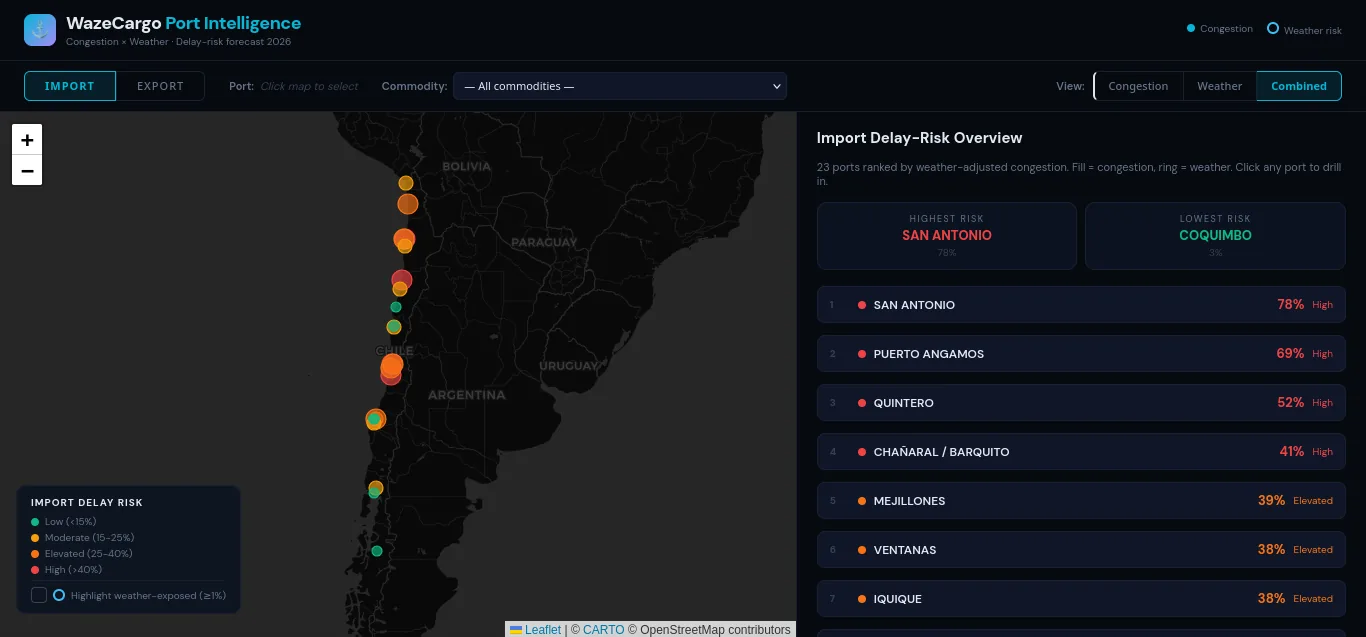
The Delay Risk Map
Import view, combined layer · 23 ports ranked
Every port at its real position, coloured by its predicted congestion. San Antonio handles 57% of
the country’s maritime imports and runs hottest, which is why the answer is so often a different port.
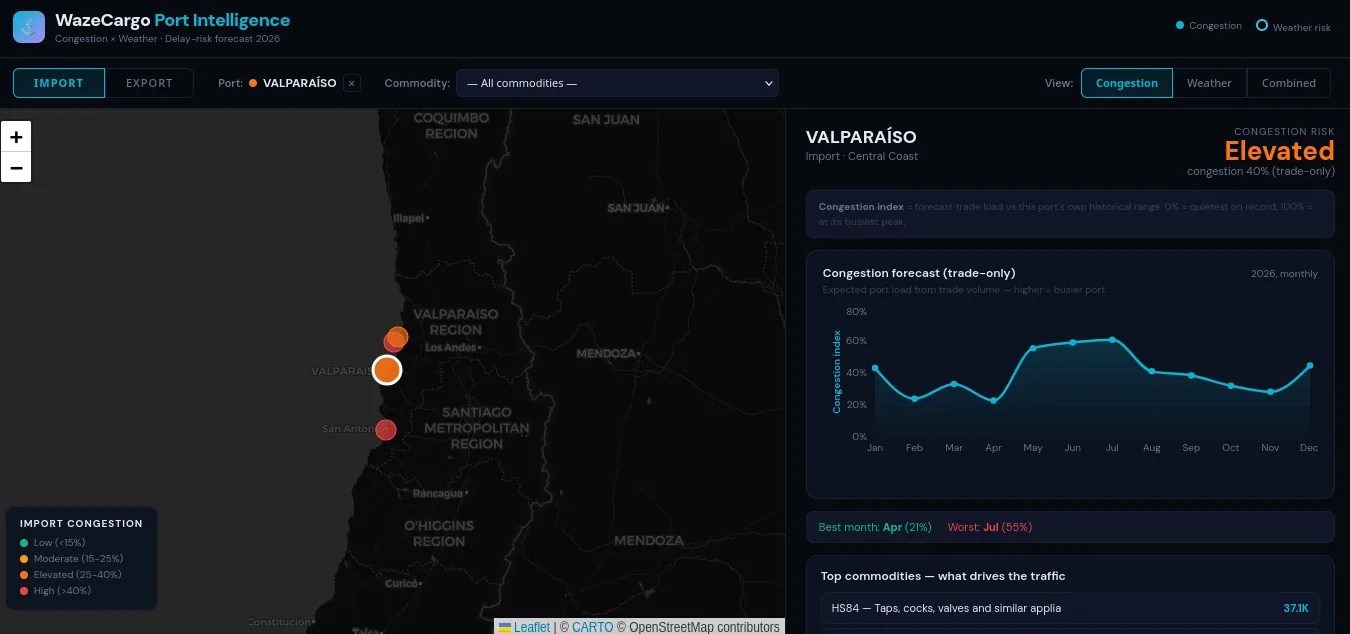
A port’s year ahead
Valparaíso, imports · congestion forecast, 2026
Load forecast month by month against the port’s own record, so a planner can see the quiet
months and the peak before booking.
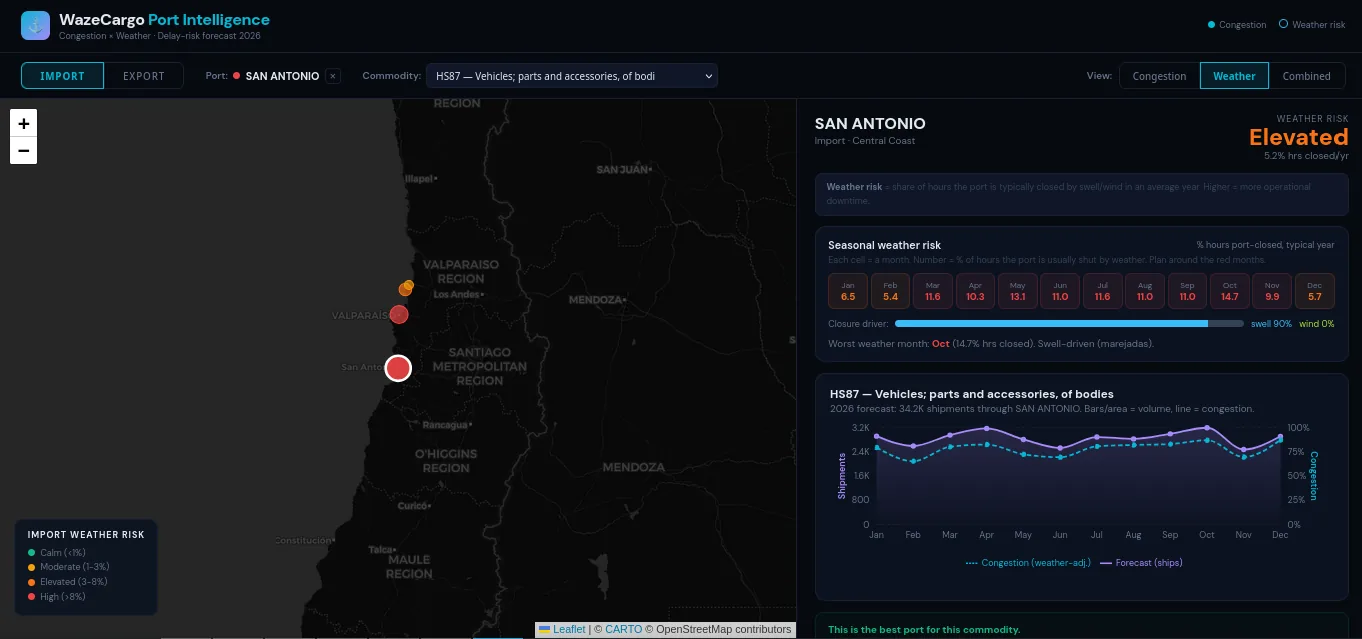
Weather, by the month
San Antonio · vehicles and parts · weather layer
Hours the port is shut by swell, each month of a typical year, laid over the forecast for one
commodity, which is the question an importer actually has.
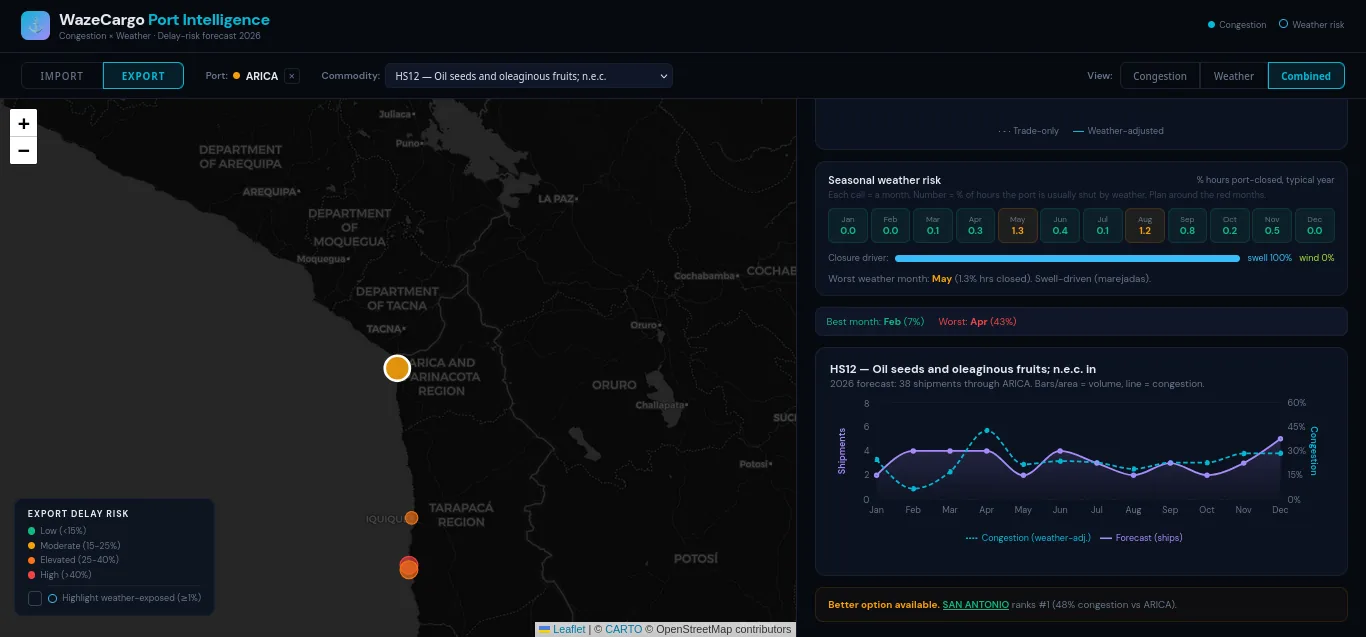
Exports, and a better option
Arica · oil seeds · combined view
For exporters too: it scores every port for the chosen commodity and says when another one
is the better route.
02
Alma Secret
AI · API integration · CRM
Alma Secret, a Spanish dermocosmetics brand, launched this campaign on almasecret.cl and wanted it
to do more than bring visitors to the site. Now a customer takes a selfie on her phone and gets an AI reading of her skin and a personal
three-product routine from the brand’s own catalogue, with safety rules for pregnancy and sensitive skin
built in. Every result goes to the brand’s CRM, so the follow-up is personal and each sale can be traced
back to the analysis that started it. The brand’s own team runs it day to day, without touching code.
skin conditions read from one selfie.
13
products in her personal routine.
3
details saved to the CRM for each analysis, ready for the follow-up.
58
Built with
JavaScript
Node.js
Cloudflare
REST APIs
Make.com
GoHighLevel
The experience, start to finish
Selfie, skin map, scores and the routine, as the customer sees them · 40 seconds
The face is AI-generated, not a customer’s. Captions are in Spanish, the language of the
brand’s customers.
03
people_counter
Computer vision
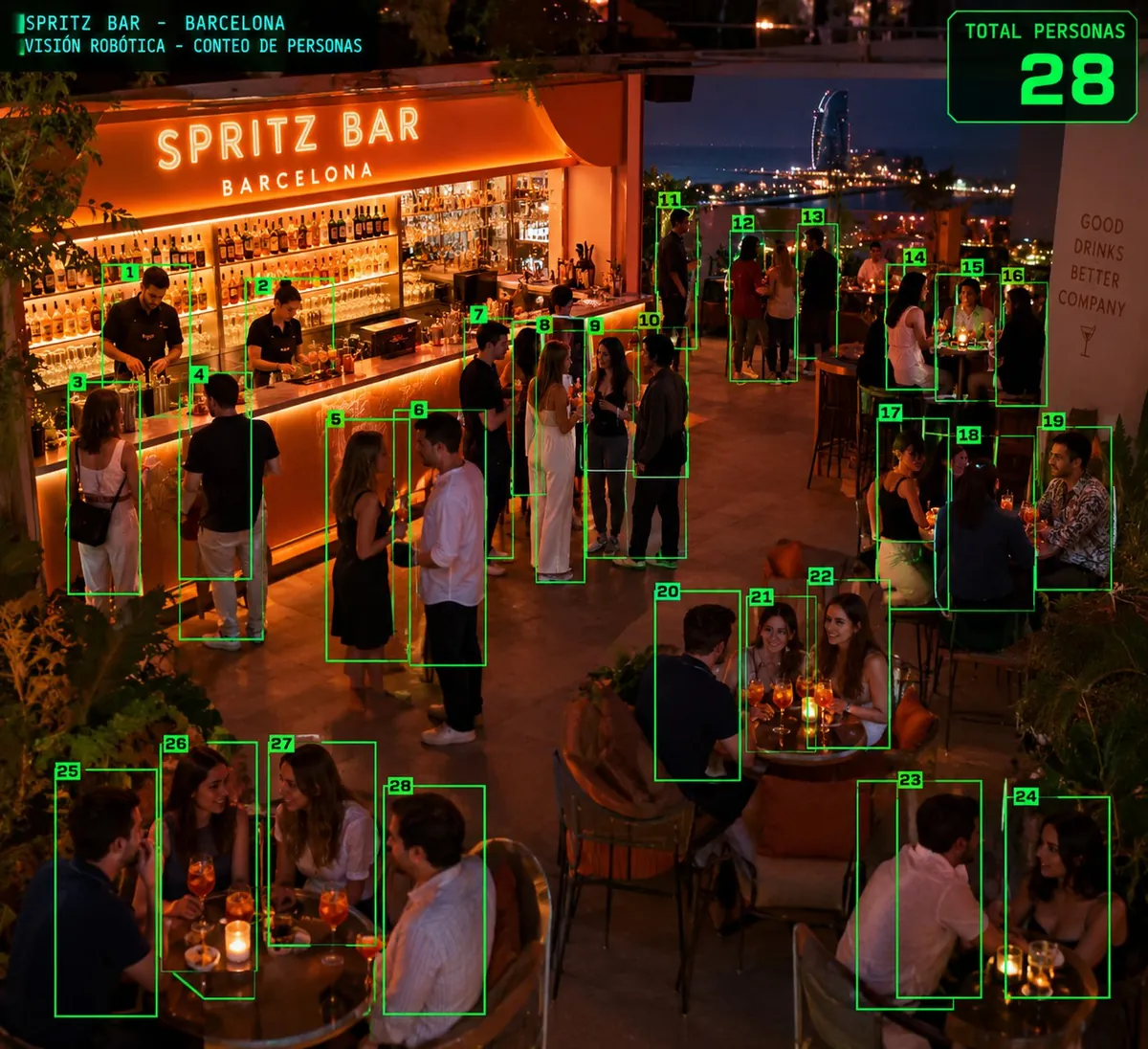
Live occupancy counting for bars and venues in Barcelona, where going over the licensed
capacity means a fine. A camera and a Raspberry Pi count the people in the room every second with a
computer-vision model, show the number and the night’s peak on a display the staff can see, and can feed
a sign, a log or an alert. The video is processed on the device and never stored or sent anywhere, so no
footage of customers leaves the building.
frames of video stored or sent off the premises.
0
second between counts, so the number on the display stays live.
1
camera works: a webcam, an IP camera or a recorded video.
Any
Built with
Python
YOLOv8
OpenCV
Raspberry Pi
What the camera sees
A bar terrace, every person boxed and counted · simulated scene
A simulated scene, not a client’s venue: the detections and the total are how the
counter marks up what it sees.
What the staff see
The 16×2 panel the counter drives, on the bar
Drawn from the panel the Pi version renders. It can also drive a real LCD on the bar, or send the count on to a sign or a log.
04
Melus Grez Propiedades
Web · Admin panel
A broker in Santiago and Pichilemu whose listings lived on portals that diluted her brand and charged her for every lead. Her own site now: her properties only, each enquiry arriving on WhatsApp with the listing code already in the message, and a panel she runs from her phone.
Built with
JavaScript
React
Cloudflare
SQL
Leaflet
REST APIs
The first screen
Brand, featured property and search, without scrolling
Prices carry UF with the peso equivalent refreshed daily, and the map shows an approximate location so an owner’s address is never published.
05
Flight data service
Coursework · Data infrastructure
Built session by session over a term on the MSc infrastructure module, on a thousand-odd raw files of real aircraft tracking data. Not client work, and listed as what it is — but it is where the medallion layering, the orchestration and the CI that the client pipelines use were learned in the open.
Built with
Python
FastAPI
Airflow
AWS
MinIO
Parquet
dbt
DuckDB
PostgreSQL
MongoDB
Neo4j
Docker
GitHub Actions
How the data moves
Ingest, layer, model, serve — one DAG end to end
Bronze and silver are the medallion layers: raw files land untouched so a bad parse can be replayed, and the Parquet layer is what everything downstream reads. The whole thing runs under Docker Compose.